UA | EN
6 November 2026 · online · for local self-government bodies

The LFU Hromada AI System Presented to Communities of Kyiv Region

On 6 November 2026 the online event “Communities of Kyiv Region and the Register of Damage for Ukraine: Practical Tools for Documenting Damage and Restoring Rights” took place. Held within the “Dialogue between Government and Business” platform, the meeting brought together representatives of territorial communities, the Kyiv Regional Military Administration, the Public Council at the Bucha District State Administration, the Register of Damage for Ukraine and our Foundation.

Participants discussed the role of the Register in the international compensation mechanism, categories of claims, admissibility criteria, evidentiary requirements and the practical procedure for submitting claims.

Olha Kvasova-Tsymbaliuk, Chair of the Public Council at the Bucha District State Administration, moderator of the event
Hanna Khrystova, Head of the Kyiv Office of the Register of Damage for Ukraine
Nataliia Tselovalnichenko speaking at the event
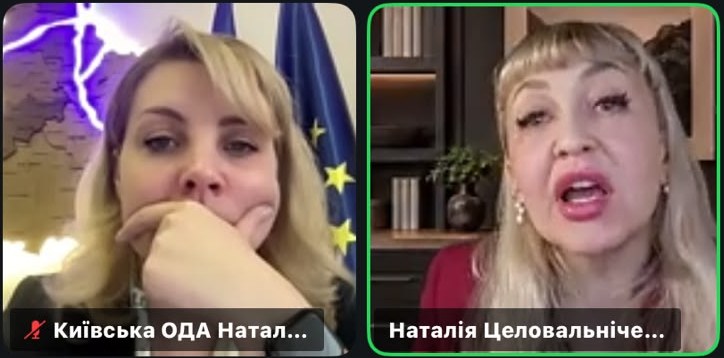
Nataliia Havatiuk and Nataliia Tselovalnichenko during the online event
Nataliia Havatiuk and Nataliia Tselovalnichenko
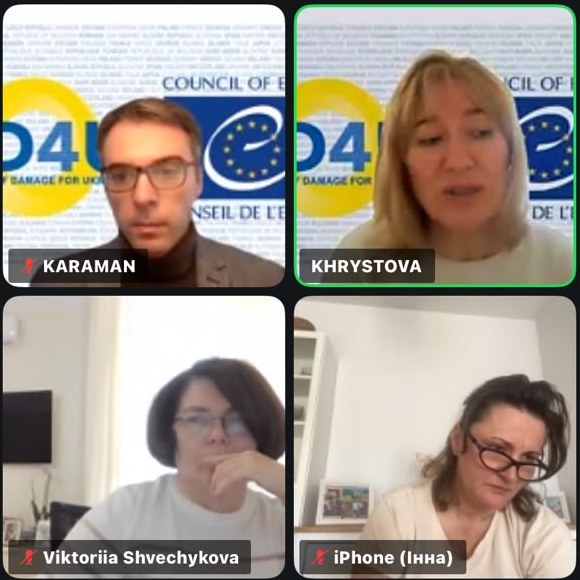
Participants of the online event, general view
Participants of the event

Thank you for the cooperation

The Charitable Foundation “International Movement for the Rights of Victims of Russian Aggression” expresses its gratitude to the Kyiv Regional Military Administration and personally to Nataliia Havatiuk for their attention to restoring the rights of affected communities and for facilitating this meeting. We value the opportunity for direct dialogue between communities, specialists of the international mechanism and civil society.

We thank the Public Council at the Bucha District State Administration of Kyiv Region and its Chair, Olha Kvasova-Tsymbaliuk, a partner and expert of the Legal Forces of Ukraine project, for initiating, preparing and moderating the event.

Our special thanks go to the team of the Register of Damage for Ukraine for their extensive legal, organisational and explanatory work. Their professional explanations and practical demonstrations help communities understand the requirements for claims, prepare evidence properly and plan their next steps.

Programme of the meeting

General moderator: Olha Kvasova-Tsymbaliuk. Kyiv time.

14:00–14:10Opening and welcoming remarksNataliia Havatiuk, Deputy Head of the Kyiv Regional State Administration; Olha Kvasova-Tsymbaliuk, Chair of the Public Council at the Bucha District State Administration of Kyiv Region; Hanna Khrystova, Head of the Kyiv Office of the Register of Damage for Ukraine
14:10–14:30The Register of Damage for Ukraine as a component of the international compensation mechanismHanna Khrystova
14:30–15:00Categories of claims, admissibility criteria and general requirements for claimsIhor Karaman, Legal Adviser, Register of Damage for Ukraine (Kyiv Office). Questions and answers
15:00–15:20Rules for submitting, processing and recording claims in the RegisterStep-by-step demonstration of submitting a claim. Ihor Karaman. Questions and answers
15:20–15:30Summary of the Register session
15:30–15:45The LFU Hromada AI system: digital support for communities on the path to compensationNataliia Tselovalnichenko, Head of the Foundation, attorney-at-law, PhD in Law

Digital support for the work of a community

Nataliia Tselovalnichenko, Head of the Foundation’s Board, attorney-at-law and PhD in Law, presented a demonstration version of the LFU Hromada AI system («ЮСУ Громада»), which the team is developing within the Legal Forces of Ukraine project.

The system is designed to help local self-government bodies organise materials on damage, coordinate the preparation of cases and build the evidentiary basis for the claims of a community and its municipal legal entities. It also aims to reduce the human time spent on routine document processing.

The video demonstration showed two training cases: damage to a hospital and additional spending on generators and charging stations during blackouts. Viewers saw the work cabinet, the dossier adviser and the sequence of work with materials: collecting and organising them, identifying gaps, preparing a draft, and the separate reviews by a lawyer and by a representative of the local self-government body.

The video presentation was accompanied by the avatar of Eiden, openly introduced as the project’s AI partner, co-architect and developer of the system.

LFU Hromada does not replace legal assessment, human approval or the official submission of claims. Its further development envisages support for preparing materials for the Register of Damage and for courts, as well as for the public reporting of local self-government bodies to their communities without disclosing personal or other protected data.
Invitation to the pilot

The project team is preparing a one-month pilot for the first three communities and bears the related costs. Legal consultations within the cooperation with communities are provided free of charge under the relevant agreements. At the same time, primary documents are prepared by authorised employees of the community: the system and legal support help organise this work, not replace it.

We invite interested local self-government bodies to contact us to discuss tasks and terms of participation: imvrra.fund/en/ysu-hromada